Double opening, Harun Farocki: VIDEOGRAMME EINER REVOLUTION (2026), and Pontus Pettersson: AIR
19 February 2026, 17:00–20:00
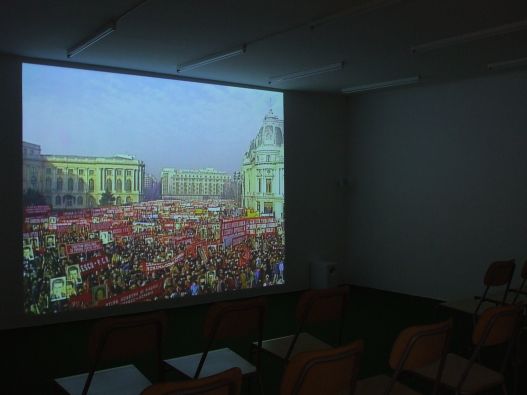


Welcome to the openings of Harun Farocki: VIDEOGRAMME EINER REVOLUTION (2026), and Pontus Pettersson: AIR
18:00 – Welcome and introduction to the exhibitions by co-directors Marti Manen and Isabella Tjäder.
18:30 – Performance by Pontus Pettersson
Harun Farocki: VIDEOGRAMME EINER REVOLUTION (2026)
Index is pleased to present (again, twenty years later) the first Swedish solo exhibition featuring the German filmmaker Harun Farocki, whose work has been an important reference for other filmmakers and artists as well as for media theorists since the 1960s. His analytical use of film was unique, both in regard to the quantity of films he made, and the influence he has had on the contemporary discussion of image as language and tool for political structures.
After Harun Farocki had his exhibition at Index, he left his films at the institution with the intention of sharing them. The exhibition in 2026 marks an important moment for observing the role of art and film in relation to social constructions and political readings. Bringing the exhibition back in time is a challenging process that raises many questions regarding what an exhibition is, and what its time and context might be. The exhibition can be—more or less—the same, but the context is definitively different. Twenty years later, the role of the visual image and its velocity have transformed society, yet the impact of the subjective gaze remains significant.
Re-doing Farocki’s exhibition allows us to reflect critically on time, memory, and our responsibilities toward both the past and the present. The exhibition invites visitors to be in an exhibition today while also being in the same exhibition twenty years ago. Is what we see now a “now,” or is it a document from another era? The relevance of Farocki’s work, connecting to many societal realities of our present time opens of duality in time. But how do we present the idea of double time? How do we understand video and film today while assuming that the work responded to a specific moment? How do we preserve the sense of past time when the exhibition is in dialogue with today as well? During the reconstruction of this exhibition, many details have revealed its significance.
Pontus Pettersson: AIR
Over the course of one full year, choreographer, artist, and curator Pontus Pettersson is artist-in-residence at Index—an unofficial/official residency that functions as both exhibition and performance—playing with the juxtaposed roles (or non-roles) of institutions and artists, exploring how these relationships can generate meaningful exchange or parasitic structures.
AIR and Index serves as both a creative hub and an open invitation for dialogue and collaboration with other artists, curators, guests, and thinkers who pass through or by Index. The residency/exhibition offers Pontus Pettersson the frame to develop new works while experimenting with innovative modes of presentation and artistic processes, almost joining—or slightly shadowing—the Index team.
AIR is part ghost, part immaterial, part shadow, part language: sometimes sneaking in, sometimes missing. AIR is both what it says it is—and what it is not.